Comparative Literature
Crossing linguistic and cultural frontiers.
Travel Across Languages and Cultural Forms
Teaching the Art of Translation
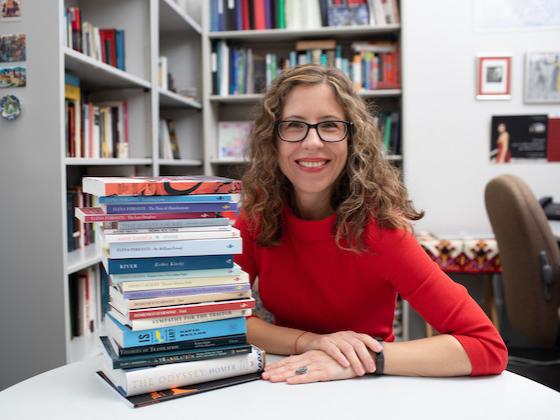
Translation is a complex activity that both invites and defies the grasp of many disciplines. Comparative literature professor Stiliana Milkova not only teaches the art of translation, she also edits Reading in Translation, an online resource for readers of English translations all over the world.
One Community, Several Pathways
Interested in studying the wider Spanish-speaking world? Oberlin has four academic programs you can major in, and you can choose more than one: Hispanic studies, Latin American studies, comparative American studies, and comparative literature.
Featured Courses
Introduction to Comparative Literature
Comparative literature is the study of literature, theory, and criticism across the boundaries of language, nation, culture, artistic medium and historical period. This course examines the nature and scope of the discipline, focusing both on its theoretical assumptions and its practical applications. Texts and topics reflect curricular strengths of the college and include literary theory, literature & the other arts, world literature, European languages and literatures, and translation.
- Taught by
Introduction to Literary Translation
The gateway to translation studies at Oberlin, this course is an introduction to the history and theory of literary translation. Focusing on culturally significant examples, students will examine linguistic, stylistic, political, economic, philosophical, and technological aspects of translation. Emphasis will be placed on the historical evolution of the roles of translators and translations and on how translation has shaped literary culture since the Renaissance. Topics will include genre and cross-genre translation (fiction, poetry, and drama), issues of translatability and translation strategy, and the impact of translations on untranslated writing.
- Taught by
- Stiliana Milkova
Poetry and Political Activism
In this course, we will consider the relationship between poetry and politics within modern and contemporary Anglophone literatures. What makes a poem or poet political? When and how has poetry been mobilized as a tool of protest and resistance? How have poets of color, Jewish poets, and writers from other marginalized communities contributed to this body of writing? Key figures include Audre Lorde, Adrienne Rich, Allen Ginsberg, and Amiri Baraka.
- Taught by
- Sheera Talpaz
Surrealism from Center to Margins
This course will begin with manifestoes and nonfictional texts by Breton and Aragon, and film, paintings, and collage-novels by Buel, Daland Ernst, and move to two margins of Europe where Surrealism was particularly strong, Latin America and Eastern Europe. Texts by Bombal, Rulfo, Felisberto Hernández, Cortázar, early García Márquez, Walser, Schulz, and Gombrowicz; paintings and films by Varo, Kahlo, Carrington, Svankmajer, and the Quay Brothers.
- Taught by
- Patrick O’Connor
Student Profiles
An Interest in Latin America
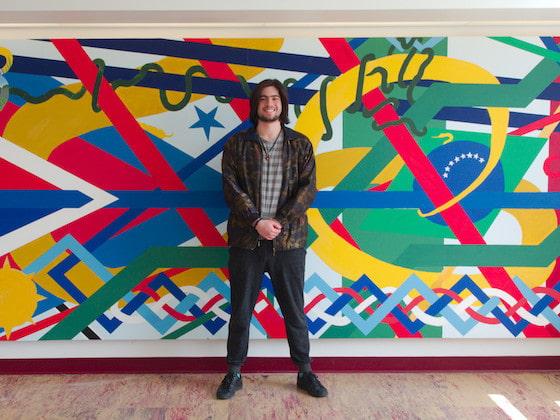
While at Oberlin, Benjamin Gilvar-Parke ’19 spent two summers and two winter terms in Guatemala through Oberlin Students in Solidarity with Guatemala and the grassroots organization DESGUA. After graduation he received a Fulbright grant to teach in Colombia.

From Oberlin to Saxony
At Oberlin, Lauren Crawford ’16 wrote for Wilder Voice, a magazine for creative nonfiction and longform journalism. She also served as a representative for the comparative literature major and taught an ExCo on Fyodor Dostoevsky’s novel Crime and Punishment in her sophomore year. After graduation she traveled to Saxony on a Fulbright.
Comparative Literature and German
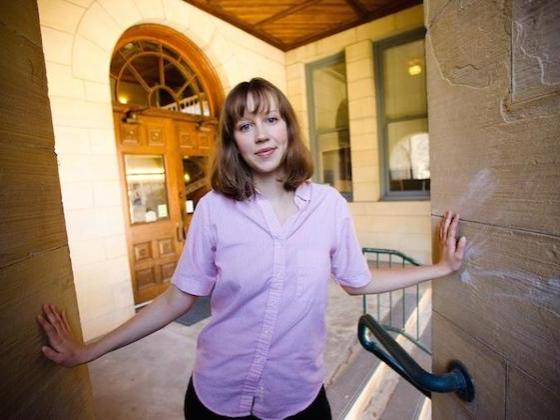
Emily Wilkerson ’15 says she came to Oberlin with the intention of studying music but “ended up finding her academic home in comparative literature.” She added her German major after spending her junior year studying at the Ludwig-Maximilians-Universität in Munich and later returned to Germany on a Fulbright.