Gender, Sexuality, and Feminist Studies
Exploring expressions, experiences, and identities.
Bodies, Queerness, Sexuality, Politics
Campus Support and Community
Oberlin is committed to a climate where all students belong and have equitable opportunities and outcomes. The GSFS department often partners with the Multicultural Resource Center to host events affirming and promoting equity for LGBTQ+ students as well as students of color and first-generation college students.
Encounters with the Future of Nightlife
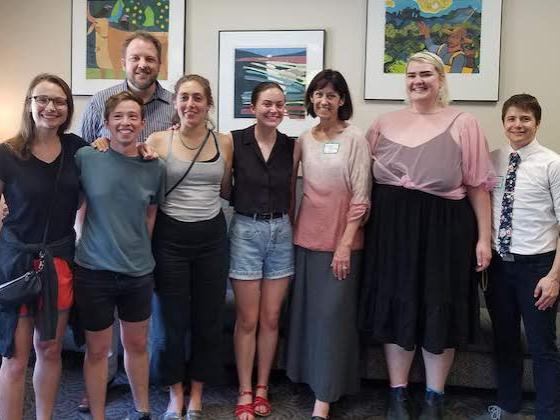
A nightlife class without nightlife? Not at Oberlin, where Professor Mattson invited 11 guest experts from around the country to discuss the present and future of nightlife as part of his course GSFS 386 Nightlife: Place, Identity, and Feeling Alive. Speakers included leading artist-scholars, business owners, and practitioners involved in making nightlife inclusive and exciting, in pandemic and beyond.

Featured Courses
Introduction to Queer Studies
This course provides an interdisciplinary grounding in historical and theoretical foundations of queer culture and theory. We will explore LGBTQ history alongside contemporary queer cultural studies. This course will address the intersections of sexuality and gender with race, class, ability, age, nationality, and religion. We will explore how historical, social, political, and economic systems have shaped and reshaped what it means to be queer or claim queer identity in the United States and abroad. Students will engage with multiple disciplinary approaches that have both shaped queer studies and have been shaped by queer methodology.
- Taught by
- KJ Cerankowski
Friends, Foes, and Feminism: Relationships in Contemporary US
We will explore complexities of human relationships, among friends, family, lovers, colleagues, community members, and strangers as they are portrayed in contemporary US novels. Of particular interest will be the ways in which these relationships (fraught? friendly?) blur lines between love and hate, respect and animosity, civility and hostility, empathy and apathy. Using feminist theory as a lens, we will also pay particular attention to characters’ identities (i.e. race, gender, class, sexuality, and more).
- Taught by
Gender and Sexuality in Indian Religions
From the erotic asceticism of the god Shiva to the auspicious power of a married woman, the nexus of gender and sexuality has broadly shaped the practices and philosophies of South Asias many religious traditions. The central questions guiding this course are: How do Buddhism, Hinduism, and Islam incorporate sexual practice and/or restraint into a vision of ethical life? When does one’s gender become dangerous or unethical? In pursuing these questions, students will gain a deep familiarity with South Asian asceticism, the place of erotics within religious discourse, new perspectives on queer and transgender theories, emic feminisms, and sexual ethics.
- Taught by
- Emilia Bachrach
Feminist Research Methodologies
This course traces the historical and dialectical impact of feminist epistemologies on disciplines of the social sciences and humanities. We explore feminist approaches to research practices including oral history, case studies, archival research, visual and literary criticism, survey/content analysis, and fieldwork. Throughout the semester, each student works on an individual research proposal that incorporates interdisciplinary methods and includes a literature review.
- Taught by
- Greggor Mattson, KJ Cerankowski, Emilia Bachrach
Student Profiles
Fulbright to Bulgaria
At Oberlin, Sophia Brewer Thompson ’20, a double major in religion and gender, sexuality, and feminist studies, served as an America Reads tutor for three years. She also worked for the Peer Support Center and co-facilitated two Intro to Peer Helping Skills courses during her senior year. After graduation, she was awarded a Fulbright English Teaching Assistantship in Bulgaria.
Newman Civic Fellow
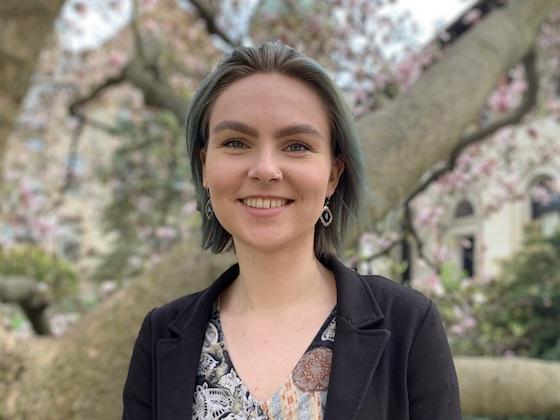
While at Oberlin, Wren Fiocco ’20, an environmental studies and gender, sexuality, and feminist studies double major, was involved with the El Centro Volunteer Initiative, Students for Energy Justice, Oberlin Students in Solidarity with Guatemala, the Resource Conservation Team, and the a capella group Nothing But Treble. After graduation, Fiocco was awarded a 2019 Newman Civic Fellowship.

Teaching in Brazil
Davíd Zager ’17, a graduate in comparative American studies and gender, sexuality, and feminist studies, was awarded a Fulbright to Brazil. During his time at Oberlin, David helped teach citizenship classes at El Centro in nearby Lorain, Ohio, and tutored ESL at Southview Middle School, also in Lorain.