

German Language and Literatures
Explore German culture from Autobahn to Zeitgeist.
German: A Key To Many Doors
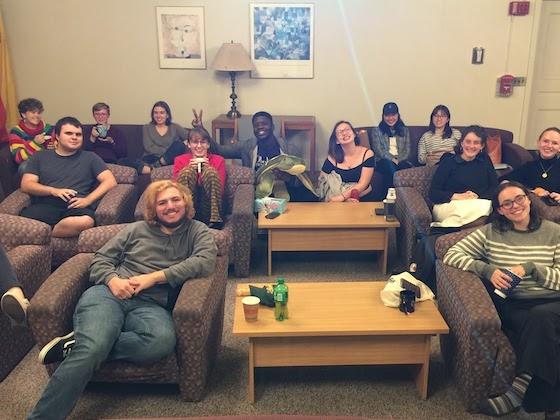
Max Kade German House
Home to over thirty students as well as a native speaker of German and a faculty member who organizes cultural events, the German House (Deutsches Haus) is a social hub for German learners and a place for linguistic immersion.
Max Kade Writer in Residence
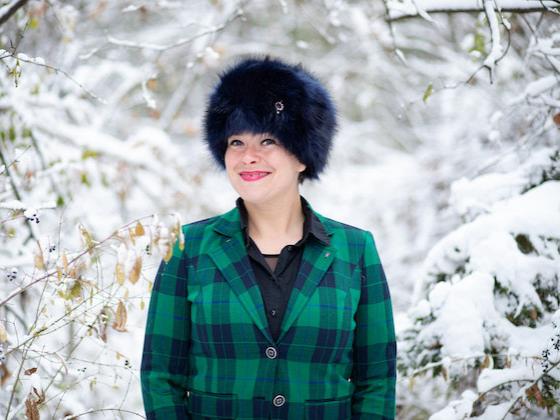
The unique Writer-in-Residence program invites world renowned authors to teach Oberlin students in an intimate seminar setting. Writers such as Uwe Kolbe, Esther Dischereit, and Nora Gomringer (pictured above) have spent a semester working closely with our students.
Featured Courses
Sex under Socialism: Narratives of Sexuality and Ideology
This course aims at exploring the unlikely combination of sexuality, ideology, and art in Socialist states. Focusing on literary, cinematic, and musical narratives from the Soviet Union and East Germany, we will look beyond the obvious flaws of the political systems infamous for their authoritarianism and total control. We will discuss sexual liberation and reproductive rights, shifts in gender roles and the family structure, and the development of the feminist movement and LGBTQ culture. While investigating the artistic representation of these topics, we will consider how artworks of different genres depict human experiences on the edge between the private and the ideological. Readings, subtitles, and discussion in English.
- Taught by
- Olesya Ivantsova
Enlightenment to Romanticism
A study of major movements, problems, and oeuvres in the literature from the 18th to the mid-19th century (Enlightenment through Romanticism). This course will explore the culturally productive tension between nascent nationalism and Goethean cosmopolitanism, the sometimes stunningly modern portrayal of women, and political and ideological tensions between Enlightenment and Romanticism. Prose, drama, and poetry by Lessing, Goethe, Schiller, Kleist, and others.
- Taught by
- Steven Huff
German Literature: Young Germany to Modernism
Provides a foundation for literary studies through 19th and 20th century drama, prose and poetry. Features works by Büchner, Grillparzer, Droste-Hülshoff, Thomas Mann, Lasker-Schüler, Kafka and Brecht.
- Taught by
- Steven Huff
Weimar Berlin
The German city of Berlin has long been a city of fascination and transformation. During the short years between WWI and the Nazi takeover, it was the center of a cultural efflorescence that has rarely been matched since, including the music of Kurt Weill, the art of Dada and Neue Sachlichkeit, and the designs of the Bauhaus, among others. This course will examine the culture of Weimar Berlin and situate it within the turbulent social life and politics of those years.
- Taught by
- Annemarie Sammartino
Student Profiles
Congress-Bundestag Youth Exchange Fellow
After studying abroad in Germany during his junior year, Lukas Griffin ’20 knew he wanted to return. After graduation he was awarded the Congress-Bundestag Youth Exchange for Young Professionals (CBYX) fellowship, a cultural immersion program in which American and German young professionals spend one year studying, interning, and living with hosts in each other’s countries.

Teaching High School in Austria
Milena Kagel ’20, a history and German studies double major, received a U.S. Teaching Assistantship (USTA) in Austria. The USTA award provides recent graduates with the opportunity to teach English in secondary schools around Austria.
“I hope to be able to pass on my enthusiasm for language learning and create some curiosity about cultural exchange,” she says.
A Fulbright Fellowship to Germany
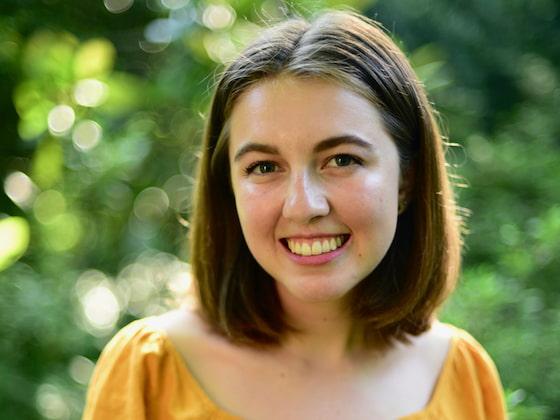
Jasmine Anderson ’17 fell in love with the German language in high school and during a gap year through the Rotary International Youth Exchange Program in Berlin. A German studies and politics major at Oberlin, she was awarded a Fulbright English Teaching Assistantship (ETA) in Germany’s southwestern state of Baden-Württemberg.
What does German at Oberlin look like?

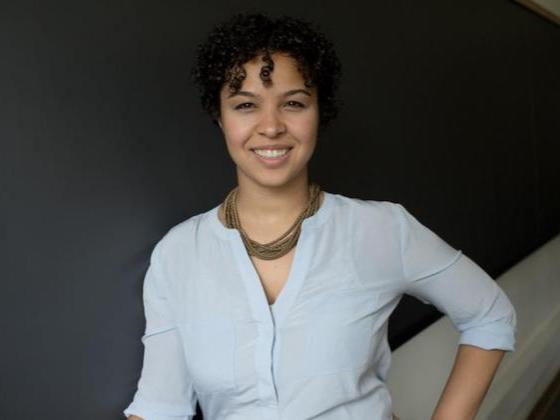
The German program features one-on-one peer tutoring as part of its curricular pathway.

An impromptu musical moment at the Max Kade German House.

Oberlin’s German students at the 2019 climate march.

A field trip organized by the German House to a nearby Amish farm.
