History
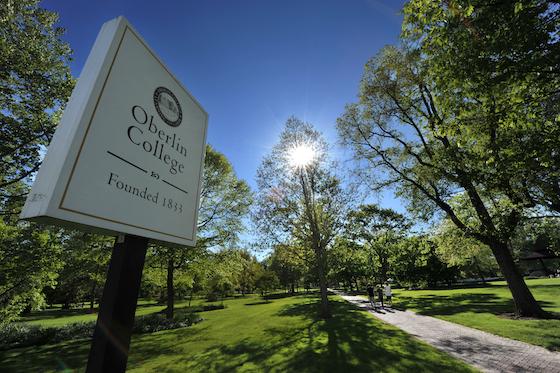
Founding: December 3, 1833, as Oberlin Collegiate Institute by Rev. John Jay Shipherd and Philo Penfield Stewart
First Settler: Peter Pease
First in Academia: Oberlin was the first college in America to adopt a policy to admit students of color (1835) and the first to grant bachelor’s degrees to women (1841) in a coeducational program.
Motto: "Learning and Labor"
Official colors: crimson and gold
Mascot: Yeomen and Yeowomen
Alma mater: Ten Thousand Strong (Oberlin, Our Alma Mater), 1913, words and music by Jason Noble Pierce
Alumni: 50,000 and counting
Location and Campus
Oberlin, Ohio, population 8,300; 35 miles southwest of Cleveland, Ohio
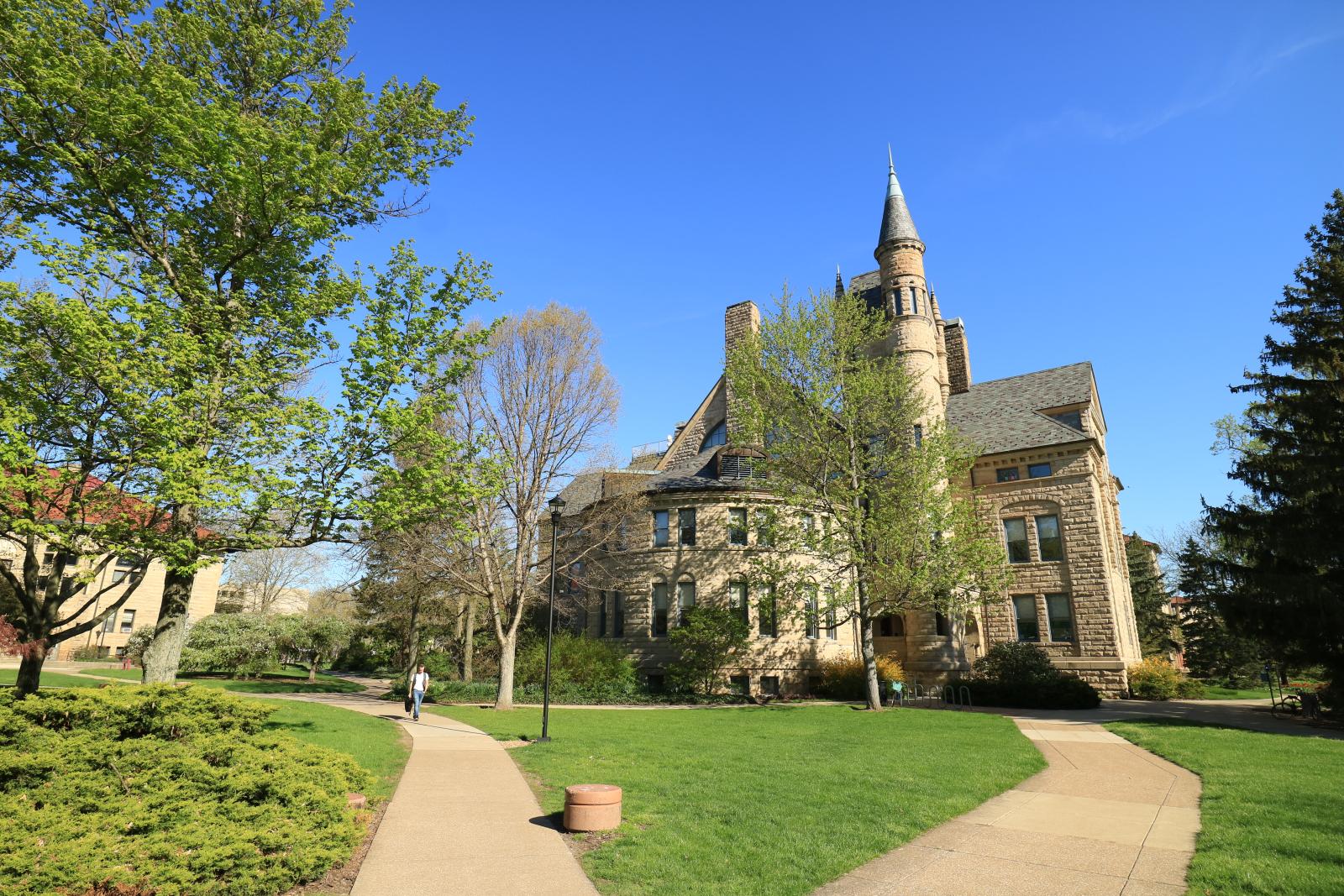
440-acre residential campus
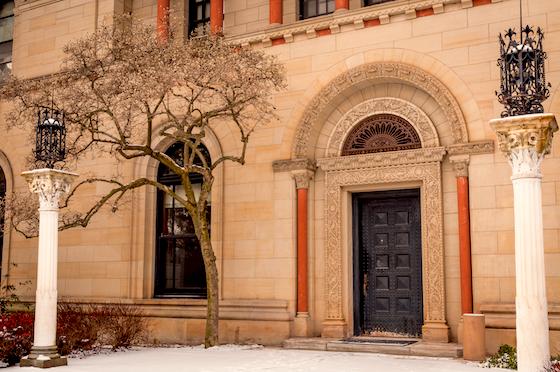
Architecture by Henry Hobson Richardson, Cass Gilbert, J.L. Silsbee, Clarence Ward, Wallace Harrison, Minoru Yamasaki, Hugh Stubbins, Warner, Burns, Toan & Lundy, Robert Venturi, Bostwick Design Partners, Krill Company Inc., Westlake Reed Leskosky
Leadership
Marvin Krislov, president
Enrollment
Total: 2,900
College of Arts and Sciences: 2,300
Conservatory of Music: 600
Double Degree: 175
Enrollment figures courtesy of the Oberlin College Office of Institutional Research.
Student Body
54 percent women and 46 percent men
20 percent students of color
92.8 percent domestic of which 9.1 percent are from Ohio; 7.2 percent are international, representing nearly 50 countries
Faculty
Student-faculty ratio
• 11:1 in the College of Arts and Sciences
• 8:1 in the Conservatory
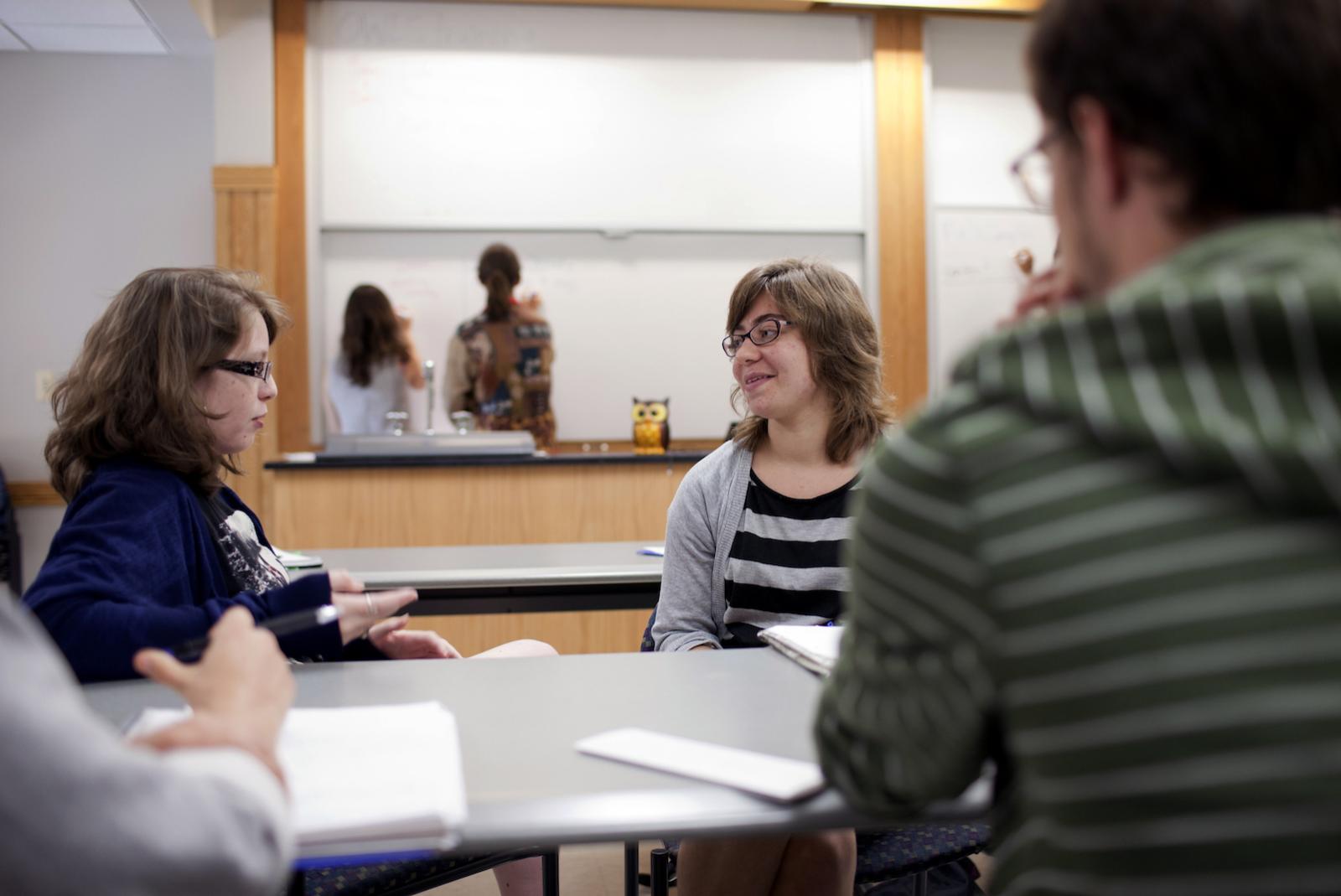
70 percent of classes have fewer than 20 students
Most faculty are active researchers and are among the foremost authorities in their fields. U.S. News & World Report recognized Oberlin faculty for their commitment to undergraduate teaching in “Best Colleges 2013” guide; Oberlin ranked third in the nation.
In the past five years, 95 percent of Oberlin's natural science faculty members received grants for research, equipment, or curriculum development. Recent grants have come from the National Science Foundation, NASA, Research Corporation, and the Camille and Henry Dreyfus Foundation, among others.
Academic Divisions
College of Arts and Sciences
• Established in 1833
• 46 majors
Conservatory of Music
• Established in 1865
• Oldest continuously operating conservatory in the United States
• Eight majors and private study in 20 areas
Accreditation
North Central Association of Colleges and Schools, Higher Learning Commission
Academic Programs
College of Arts and Sciences
• Curriculum includes study in the humanities, social sciences, and natural sciences and mathematics
• Four-year undergraduate program leading to the BA degree
• Five-year double-degree program leading to both the BA and BM degrees
Conservatory of Music
• Four-year undergraduate program leading to the BM degree
• Five-year Double Degree Program leading to both the BA and BM degrees
• Two-year programs leading to a Performance Diploma (undergraduate) or an Artist Diploma (graduate)
Degree Designations
• Bachelor of Arts (BA)
• Bachelor of Music (BM)
• Double Degree (BA and BM)
• Master of Music in Historical Performance (MM)
• Master of Music Teaching (MMT)
• Master of Music (conducting, opera theater, performance on historical instruments, MM)
Certificates
• Artist Diploma
• Performance Diploma
Athletics
• 22 varsity teams
• North Coast Athletic Conference, Division III
• 30 percent of students participate in intramural and club sports
Activities
• 175 active student groups
• 1,200 students annually participate in service programs
• 75 percent of students have some type of international or service experience during college
Arts and Culture
The Allen Memorial Art Museum, with collections that place it among the top five college art museums in the nation, was established in 1917.
The Apollo Theatre, one of the few continuously running, single-screen movie houses in the country, was established in 1913.
The Main Library in Mudd Learning Center, and three other campus libraries specializing in music, art, and science , house more than 2.4 million items.
The college and conservatory sponsor more than 500 concerts and recitals, about 40 theater and dance productions, and two operas each year.