

Africana Studies
Pursue an expansive, socially-relevant field of study.
Pursue an Interdisciplinary, Timely Field of Inquiry
A Department with History
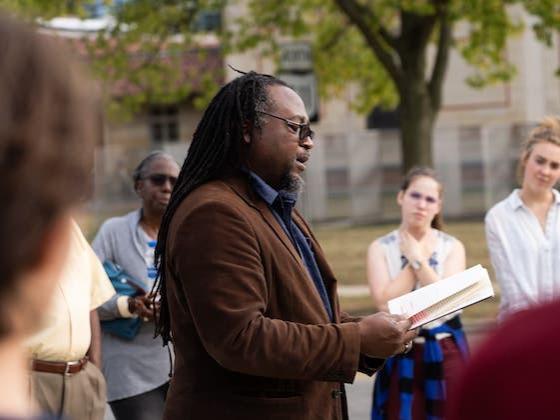
2019 marked the 50th anniversary of what is now Oberlin’s Africana studies department, one of the first established at a liberal arts college in the United States.
Step into a Community
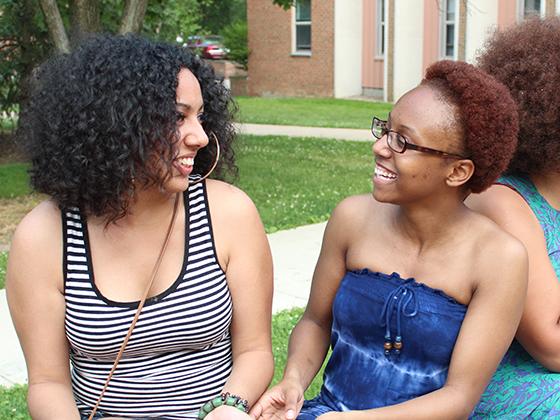
The Afrikan Heritage House serves as a center of Black culture and student life on campus, hosting a broad range of activities designed to advance community-wide knowledge of Africana heritage, including soul sessions, art shows, poetry readings, and the Kuumba (Creativity) festival.
Undergraduate Research at Oberlin

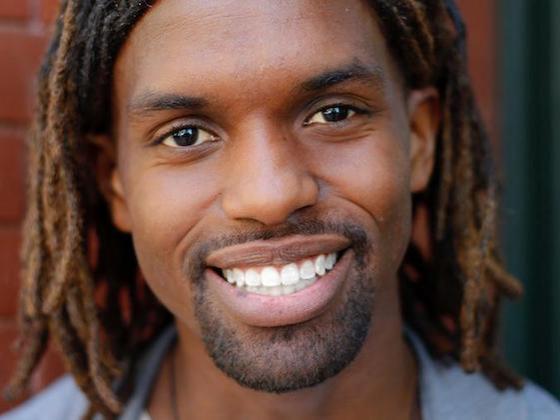
My research aims at understanding decolonial and revolutionary efforts throughout the African Diaspora through music and physical expression.
Featured Courses
Introduction to Africana Studies
An interdisciplinary exploration of key aspects of Black history, culture, and life in Africa and the Americas. The course attempts to provide students with a fundamental intellectual understanding of the universal Black experience as it has been described and interpreted by humanists and social scientists. Included in the course will be such topics as the Africana Studies movement, the African heritage of Afro-Americans, Pan-African relations, racism and sexism, the family, the role of religion in Black life, class structure and class relations, the political economy of African American life, and Black political power.
- Taught by
- Justin Emeka ’95
Traditional African Cosmology and Religions: Shifting Contours and Contested Terrains
This class explores how African Cosmology (the conception of the origin and nature of the universe) helps to frame the understanding of Traditional African religions (TAR) and their practices as they have emerged in the history of the African continent. It examines the underlying nature of African Religious thought and the role and function of myth and ritual in these religions. The class will investigate indigenized Islam and Christianity as well as western modernity.
- Taught by
- Darko Opoku
Afrofuturism: Black to the Future
When Octavia Butler and Charles Delaney coined ‘speculative fiction’ as a genre that challenged the absence of Black people in conventional science fiction, they presented models for a future where Black people were subjects not excluded from the narrative of American progress. This course examines the emergence of Afrofuturism in 1992 and its application to Black Speculative Fiction in the 20th and 21st centuries as part of an ongoing international dialogue on Black identities.
- Taught by
- Meredith Gadsby
Playwriting and Performance in the Time of the Black Lives Matter Movement
In this exciting time in the fight for social justice centered on the Black Lives Matters Movement, students will write/create their own original plays and performance pieces responding to current and historical events. Students from all backgrounds are invited to explore how the worlds of theater and performance are making work steeped in the quest for Black equality in a climate of other great challenges-including works on virtual platforms.
- Taught by
- Caroline Jackson Smith
Student Profile
Community, Mentoring, and Diversifying Athletics
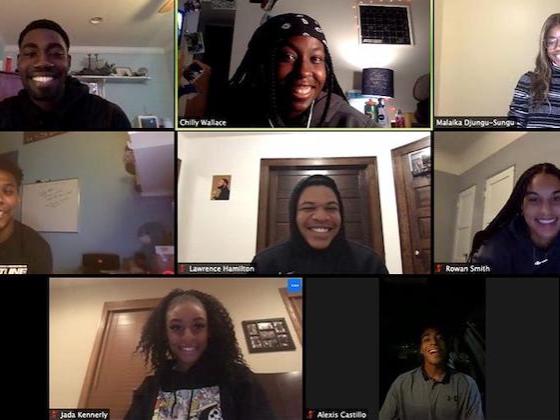
When Malaïka Djungu-Sungu ’22, a member of the women’s track and field team majoring in economics and Africana studies, became cochair of the Black Student Athlete Group (BSAG), she recognized an opportunity work creatively with her peers to diversify the school’s athletics department.
Confidence in Research
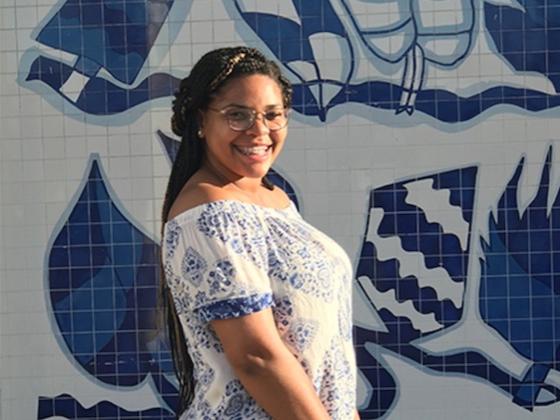
At Oberlin, Morgan Thomas ’19 majored in neuroscience with a minor in Africana studies. Because of Oberlin’s small class sizes and focus on undergraduate students, Thomas gained valuable research skills that she now employs as a research technician in a neurotoxicology lab at Purdue University.
Early Success as a Playwright
At Oberlin, B.J. Tindal worked closely with professor Caroline Jackson Smith. Fresh out of the graduate program in Writing for the Screen and Stage at Northwestern University, the 2016 graduate returned to campus for the opening of the Oberlin theater mainstage production of What We Look Like, a play he developed his first year at Oberlin.
Upcoming Africana Studies Events
Concert: Djembe Orchestra
Black Families Appreciation Ceremony and Dinner
What does Africana Studies at Oberlin look like?

Students in Professor Darko Opoku’s First Year Seminar on African politics.

Professor Pam Brooks researches and teaches courses on the Black Freedom Movement, women’s history, as well as race and the prison industrial complex.

Professors Meredith Gadsby, Gina Perez, and Shelley Lee collaborated on “Sanctuary Practices: Race, Refuge, and Immigration in America,” a StudiOC learning cluster.

Professor Justin Emeka directing The Glass Menagerie reimagined and set in East St. Louis during the turbulence of the early 20th century.

The Black Parent and Family Appreciation ceremony is held every year the Sunday before Oberlin’s Commencement day.

Students from the Choreography in the Cultural Traditions class perform in the Oberlin Dance Company concert directed by Professor Talise Campbell.

The Afrikan Heritage House hosts welcome dinners at the start of each academic year.

Oberlin students visit alum Yemko Pryor ’17, now a PhD student at Emory, as part of a Winter Term trip beginning in Memphis and ending in Atlanta, focusing on the Civil Rights era and the arts.
