Computer Science
Help define the future.
Computers Permeate Our Modern Lives
Embodying Technology
From smartphones to surveillance systems and automated machinery, sensor technologies and computers permeate our modern world. A new Oberlin learning community explores the liminal space between the physical and the digital.
Conduct Original Research
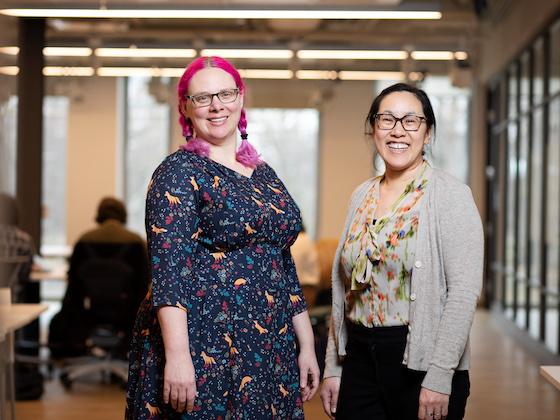
From projects funded by the National Science Foundation to the Oberlin Summer Research Institute, students have the opportunity to collaborate with a faculty member on diverse research areas within computer science.
Undergraduate Research

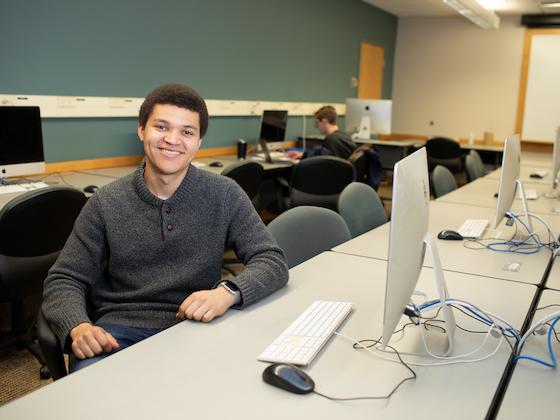
Iago is researching methods for analyzing black holes. “We will be able to compute the mass and energy during a collision…which has never been done before.”
Featured Courses
Introduction to Computer Science
Learn the basics of Computer Science and coding in this course. Interactive class discussion and weekly coding labs will teach you everything you need to know to write programs to process data, draw pictures, play games, or make music.
- Taught by
- Sam Taggart
Human-Computer Interaction
This course explores how humans interact with computers, and how computers mediate our interactions with the world. Topics covered include interface design, user studies, accessibility, and ubiquitous computing. We read current research papers in this area, and students complete a group programming project exploring some aspect of human-computer interaction.
- Taught by
- Cynthia Taylor
Privacy, Anonymity and Social Networks
In today’s networked and electronic society, personal information and social habits are increasingly available to potentially unauthorized parties. The protection of this information requires balancing social, legal, and economic pressures. This course will introduce students to current research that tackles such privacy challenges in an interdisciplinary approach.
- Taught by
- Roberto Hoyle
Machine Learning and Data Mining
Machine learning and data mining enable computers to learn to perform tasks without explicit programming, as well as discover interesting information from data. Students gain hands-on practice with popular machine learning and data mining algorithms, as well as discuss challenges, issues and solutions to working with complexities in real-world data.
- Taught by
- Adam Eck
Student Profiles
He's Feeling Lucky
Matt Blankinship ’17 is a cybersecurity expert who began his career at Amazon before joining another tech giant: Google. Passionate about data privacy in this digital age, Blankinship works to improve security measures for a variety of Google products.
From Oberlin to Google
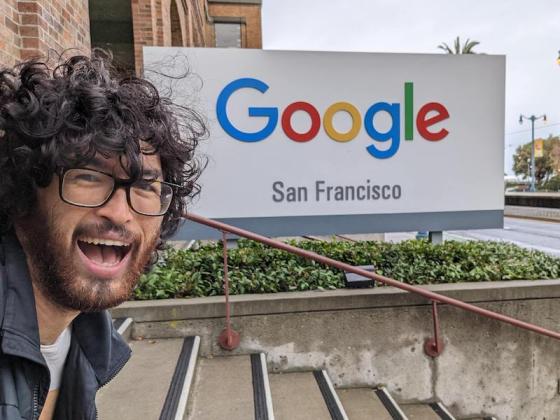
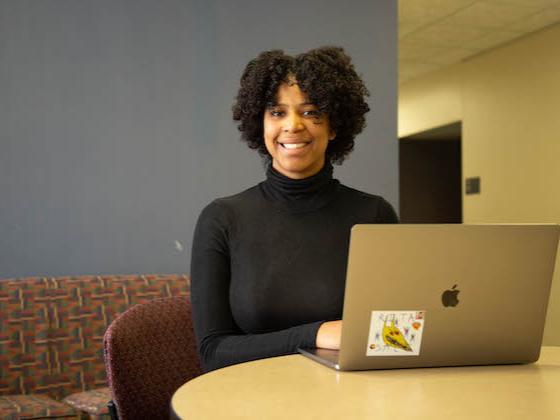
Four Oberlin computer science majors have accepted jobs from the tech giant while still in their senior year. Sage Vouse ’19 is one of them.
Programming for Professionals
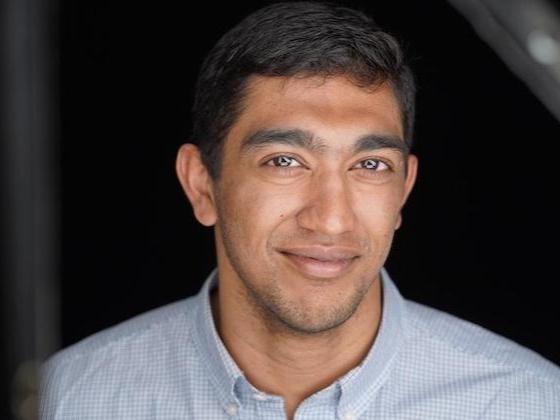
A computer science graduate and former member of the men’s tennis team at Oberlin, Manickam Manickam ’18 has brought enthusiasm and a robust work ethic to his first postgraduate job.
What does Computer Science at Oberlin look like?

Jane Hsieh ’19 (currently a PhD student at Carnegie Mellon) presents her research at IEEE Symposium on Visual Languages and Human-Centric Computing in Lisbon, Portugal.

Students attend the Grace Hopper Celebration of Women in Computing.

A course on machine learning with Professor Adam Eck.

Discussion and collaborative learning are integral parts of the classroom experience.