
Life at Oberlin

Our vibrant campus community is full of opportunities to explore, connect, and learn. In an environment that prioritizes inclusion and respect, you’ll have options for everything from housing to hanging out.
Living on Campus
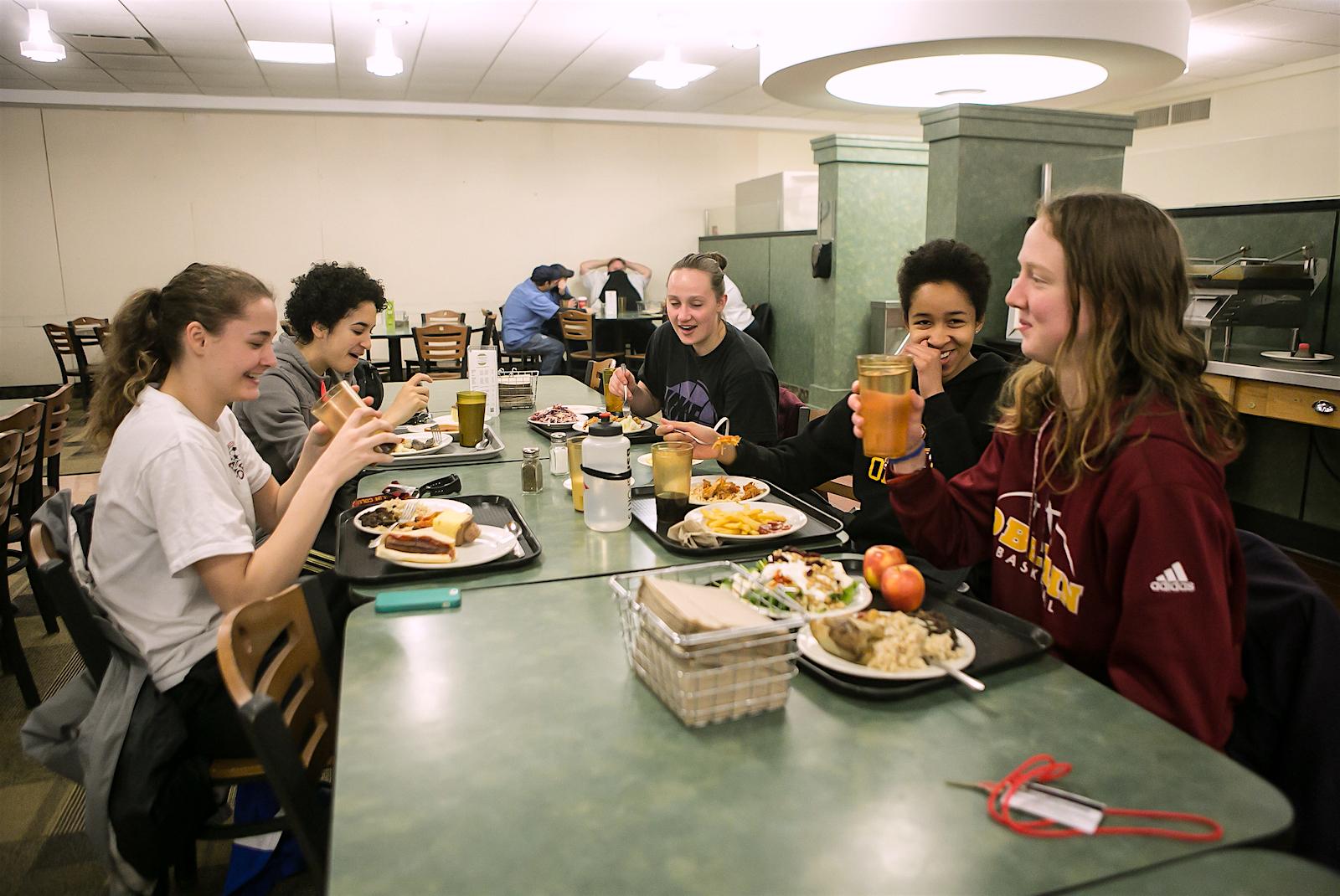
Our residential campus means the learning never stops. Choose a traditional residence hall or perhaps one with a sci-fi theme. Eat in a dining hall or cook with friends in a co-op. Where you live and eat becomes another opportunity to learn from your peers and develop as an individual.
Things to Do
We fit an impressive array of activities onto our small campus and the city of Oberlin. The only thing you have to fear is ... missing out. Whether you’re interested in bowling, slam poetry, reproductive freedom, or swing dance, you’ll find a reason to leave your room. You can even explore what Oberlin’s Main Street has to offer.
Obie Values
True intellectual freedom requires a foundation of honesty, integrity, and responsibility. Learn how our values infuse everything we do to lead toward one goal: a more sustainable, respectful, and interconnected community.
Arts and Activities
Arts at Oberlin
Whether you’re creating, participating, or simply appreciating, you’ll benefit from our thriving arts community. Choose from more than 500 concerts and performances a year and clubs from swing dance to acrobatics to film to hip-hop.
Art Museum
The Allen Memorial Art Museum's collection is a vital cultural and educational resource for Oberlin students, faculty, and staff, as well as the surrounding community. Events and exhibits are free. Always.
Clubs & Organizations
With nearly 200 student groups and clubs, and the liberty to create more, you can develop your interests or discover new ones: acrobatics, badminton, comics, dressage—the list goes on.
Take an ExCo – or Teach an ExCo
Oberlin ExCo offers for-credit courses taught by students and community members, on just about any subject you can imagine. Recent courses include Basic Yoruba Language, The Science of Food, Fanfic-Co, Intro to Cryptozoology, Non-Western Avant-garde Music, and Introduction to Juggling. What will you teach?
